So…
It's been an awful long time since I've written, and I've read some amazing, very unique books since. I won't talk about all of them, but a few were particularly special. All the books I read are part of the bookshelf list on the bottom of the site (except for mobile version). Also, on my Dayre account I usually log what I'm reading, mostly through posting up pictures and quotes that are really worth your while!!
Independent People, Halldor Laxness
An Icelandic epic written by a winner of the Nobel Prize, this book took me a little long to get into. The first 10%of the novel I loved, but then the plot took a big down-turn and got really boring, with the main character marrying a girl who quickly died off. I became invested after her death, when the protagonist, Bjartur, marries again and has children. His relationship with his children and their growth dominated most of the story, as does Bjartur's fierce independent nature (hence, the title).
A Tale for the Time Being, Ruth Ozeki
This novel surprised me. I picked it up at the airport, forgetting I had marked it on a wish list on Goodreads, expecting something good. It ended up being great. The confessional diary of a troubled Japanese girl (who feels distinctly American, having grown up in California) struggling with terrifying issues like extreme bullying and a suicidal father finds its way to the hands of someone very far away... Ruth is an author, though she recently denies this, since she feels she has lost her ability to write. The workings of a memoir lie uncompleted, a pile of memories on her desk. Ruth lives a very isolated, rural lifestyle on a Canadian Island with her husband. Finding Nao's diary is a moment of discovery for Ruth, and she learns to wake up to the life around her. The two protagonists, Ruth and Nao, are crafted very well; they are believable, endearing, but also human in their faults. Nao, though bullied herself, once or twice unabashedly bullies those who are even more "uncool" than her, and, as many teenagers are, is often snappy and unthinking. Ruth similarly toys with the reader's sympathies, as she is sometimes dismissive of her husband, a character for whom I felt a great affinity. She is picky, moody, and also occasionally shortsighted. These are very human qualities and ones that I cannot claim freedom from, and it is part of this complex characterization that made this novel so engaging. It was also a great story, one that I recommend to just about anyone. I enjoyed reading this book especially because one of the main things I got out of Ozeki's novel was the importance of every single moment, of every single second, of every day--the importance of awareness and conscious living. It was a message that went very well with two other books I read in this same time period, The Shipping News and, more particularly, Humboldt's Gift.
The Shipping News, Annie Proulx
One of the more distinctive books I've ever read. The writing style was impressively beautiful, with an abundance of beautiful and striking metaphors. The sentences are short, clipped, and yet full of voice. I'll leave the description for this one minimal, but it's another great recommendation.
Humboldt's Gift, Saul Bellow
A wonderful, exciting, hilarious, novel, HB served as my introduction to the world of Saul Bellow Books. I cannot wait to return. At turns riotous and stagnant (in the best way possible), the plot, though busy, is never afraid to make room for the workings of the mind of Charlie Citrine (another unbelievably memorable character; suffice it to say, this book blew me away). Charlie Citrine has been alive for around six decades, during which time he has managed to fall hopelessly in love with many people, become a famous author, win prizes and honors from America and abroad, get married and divorced, and then lose all the money he ever worked for. He is a passive man, content to think and do whatever to please those around him, always willing to experience the sensational. It was a pleasure to spend a few days reading this book and immersing myself in the beautiful words that comprise this novel.
A Dirty Job, Christopher Moore
Humorous, light, and fun to read, this Christopher Moore novel, another first for me, chronicles the tale of Charlie Asher, who, on top of being a recently widowed new father, is now also a Death Merchant...
Eleanor & Park, Rainbow Rowell
A romance between two sixteen year olds…loved this book intensely. I finished it last night and haven't stopped thinking about it since. It brings up some very important issues about gender, family, bullying, and love.
There have been other books, but these were the most recent. I'm also still exploring short stories, which is great. I'll be posting pictures soon, and also starting a reading diary for an amazing book I just started reading: The Island of Second Sight

Reading Now


16 January 2014

16 November 2013
Playing Catch-Up
I've definitely been a bad blogger! I have derelicted my duties for far too long. In the interim, though, I have read:
Breathless, Anne Sward
* * * * *
This novel was short and very unique. It follows a very strong relationship between a young girl and a boy who is older than her. Their relationship, though never sexual, is passionate and a vital piece of their lives. The novel takes some unexpected turns, and I felt the ending to be very satisfying. Though many readers may grant this book four stars at the most, I gave it five because it matched my expectations, if not exceeded them! I think I was an exceptional reader for this book; I very much enjoyed the writing style and organization, though by perusing other reviews I can see that that might have lost many other readers.

Bleeding Edge, Thomas Pynchon
* * * *
I wrote a post for Bleeding Edge way back when but I never ended up actually putting it up! Maybe I will do so soon, as late as it will be. As much as I loved this book, and Pynchon in general, I gave it four stars because, personally, reading about dot-com business and the technology bubble just was not my thing.

Magic Mountain, Thomas Mann
* * * * *
This was an experience I should have recorded per chapter. The third major book I've read on time (the first being A Search for Lost Time, which technically I still have to finish; the second, Nabokov's Ada, or Ardor), Magic Mountain might be my favorite of the three. I particularly enjoyed how long it took me to read this book--throughout the whole novel, the reader is made to think about the experience of passing time. When does time feel like it moves faster? Is it actually moving faster? What about the instruments that measure time? What happens when days blend into one another so that time no longer exists? I read this book for about a month but never experienced boredom. It was in many ways a random book, but all I can say was that it was my type of reading!

Night Circus, Erin Morgenstern
* * * *
Super fun and easy read, I wouldn't call this book great literature. Regardless, it had its strong points, including a spectacular ending (in my humble opinion), really cool descriptions, and a neat cast of characters.

The Third Life of Grange Copeland, Alice Walker
* * * *
I had to read this book for school, so the fact that it was not a book I'd ever have picked up on my own automatically dampened the enjoyment I found in it.
We Are Water, Wally Lamb
* * * * *
We are Water was my most recent read. As a devout fan of Lamb (I've read I Know This Much is True, She's Come Undone, and The Hour I First Believed), I was beyond excited when I heard he was coming out with another novel. We are Water was a scathingly real book--the characters are brought to life for the reader in a way that few novels can achieve. Lamb is a master at what he does, at portraying flawed humans we can essentially root for, people who are trying to find ways to maneuver the turmoil, pain, and secrets that make up human life. Pedophilia and molestation, abuse and divorce are only some of the topics that the novel explores. The style of writing is perhaps what is most Lamb-like. The book is written in the POV of many different characters, and you really get into the head of each, adopting their thought-processes. There were a couple of things/moments that I did not like, but overall I thought his new novel was a great success, on par with his older works.
I probably have to stop buying so many books. I have too many on my plate and I worry I won't finish all of them! Here are some of the books I can't get off my mind, most of which I already bought:
1- Artist of the Floating World, by Kazuo Ishiguro
2- Independent People, Halldor Laxness
3- Spring Snow, Yukio Mishima
Breathless, Anne Sward
* * * * *
This novel was short and very unique. It follows a very strong relationship between a young girl and a boy who is older than her. Their relationship, though never sexual, is passionate and a vital piece of their lives. The novel takes some unexpected turns, and I felt the ending to be very satisfying. Though many readers may grant this book four stars at the most, I gave it five because it matched my expectations, if not exceeded them! I think I was an exceptional reader for this book; I very much enjoyed the writing style and organization, though by perusing other reviews I can see that that might have lost many other readers.

Bleeding Edge, Thomas Pynchon
* * * *
I wrote a post for Bleeding Edge way back when but I never ended up actually putting it up! Maybe I will do so soon, as late as it will be. As much as I loved this book, and Pynchon in general, I gave it four stars because, personally, reading about dot-com business and the technology bubble just was not my thing.

Magic Mountain, Thomas Mann
* * * * *
This was an experience I should have recorded per chapter. The third major book I've read on time (the first being A Search for Lost Time, which technically I still have to finish; the second, Nabokov's Ada, or Ardor), Magic Mountain might be my favorite of the three. I particularly enjoyed how long it took me to read this book--throughout the whole novel, the reader is made to think about the experience of passing time. When does time feel like it moves faster? Is it actually moving faster? What about the instruments that measure time? What happens when days blend into one another so that time no longer exists? I read this book for about a month but never experienced boredom. It was in many ways a random book, but all I can say was that it was my type of reading!

Night Circus, Erin Morgenstern
* * * *
Super fun and easy read, I wouldn't call this book great literature. Regardless, it had its strong points, including a spectacular ending (in my humble opinion), really cool descriptions, and a neat cast of characters.

The Third Life of Grange Copeland, Alice Walker
* * * *
I had to read this book for school, so the fact that it was not a book I'd ever have picked up on my own automatically dampened the enjoyment I found in it.
We Are Water, Wally Lamb
* * * * *
We are Water was my most recent read. As a devout fan of Lamb (I've read I Know This Much is True, She's Come Undone, and The Hour I First Believed), I was beyond excited when I heard he was coming out with another novel. We are Water was a scathingly real book--the characters are brought to life for the reader in a way that few novels can achieve. Lamb is a master at what he does, at portraying flawed humans we can essentially root for, people who are trying to find ways to maneuver the turmoil, pain, and secrets that make up human life. Pedophilia and molestation, abuse and divorce are only some of the topics that the novel explores. The style of writing is perhaps what is most Lamb-like. The book is written in the POV of many different characters, and you really get into the head of each, adopting their thought-processes. There were a couple of things/moments that I did not like, but overall I thought his new novel was a great success, on par with his older works.
I probably have to stop buying so many books. I have too many on my plate and I worry I won't finish all of them! Here are some of the books I can't get off my mind, most of which I already bought:
1- Artist of the Floating World, by Kazuo Ishiguro
2- Independent People, Halldor Laxness
3- Spring Snow, Yukio Mishima
28 September 2013
Two Abysses
Hello, readers!
Last time I checked in, I had just finished Paul Auster's The New York Trilogy. Though the text can be found right under this post, it feels to me as if I'd read that book at least one whole month ago. Since then, I finally read my first Russian novel! This is something I find worth celebrating. I once tried to read Anna Karenina and failed miserably; I found it boring and dry. It was a while ago, so I may have been too young, who knows (and maybe one day soon I'll try it again). I recently read The Brothers Karamazov, by Fyodor Dostoevsky, and I have to say I truly loved it!

On one level, I was surprised by how easy it was to read the book. By no means dry or convoluted, the book was simple to follow. For some reason, I had expected very dense material and to be confused by the names and the themes. To my delight, it was a straightforward, entertaining plot, though with a good share of philosophical, psychological, and religious explorations.
As for the story itself, most of the time I felt like I was watching a novella, not really reading a book. The phrase "in a passionate frenzy" does a good job of summing up of many of the characters' actions--whether it be falling to the ground in tears to kiss the floor, declamations of guilt and/or love, promises to kill or revenge, etc., etc. Not only were the actions passionate, the story itself was dramatic and truly worthy of a soap opera! The end section of the novel takes a totally different turn, resembling a murder mystery show or court-drama we'd find on TV today. Witnesses, jurors and lawyers play out a trial that aims to determine if one man is guilty or innocent, and the question has never seemed so important.
The Karamazov family is not known for being a set of clean, honest men. Fyodor Pavlovich, a lecherous man, is the father of four sons, three of them legitimate. The eldest son, Dmitry, takes much after his father and lives the life of a sensualist, until he has an encounter with and becomes engaged to an honorable, beautiful lady named Katerina Ivanovna. She, however, does not truly love Dmitri (or, rather, she sometimes does, sometimes does not). More importantly, Dmitri does not really love her either. He has actually fallen head over heels in love with a women who, lets just say, does not have the best reputation around town (her summary in Wikipedia refers to her as a "Jezebel"). Her name is Grushenka. The heart of the trouble of the lives of the Karamazovs, Grushenka is a wild girl who often admits that she enjoys laughing at the father and brother who fight over her. For it just so happens that Fyodor also is in love with Grushenka. Father and son, both loud mouthed, passionate men fighting for the same sly, beautiful woman leads only to disaster. To complicate matters, the middle brother Ivan is also romantically involved with Katerina. Alexei is the final brother, the "hero" of the story, who worries over the sin and destruction of his brothers but is essentially powerless to stop it.
If I were to really write about this novel, which I would love to, because there is an overwhelming possibility of topics to explore, I would examine the role of Alyoshka (Alexei). Though the narrator never fully reveals his own identity, we know that he think of Alyosha as "the hero" of the story. This is particularly interesting because Alyoshka does not (cannot) do anything to stop the terrible course of events that take place in The Brothers Karamazov. For the most part, the beginning of the book certainly focuses on him and his torn nature. On the one hand, Alyoshka is a Karamazov, through and through, meaning he understands the pull of sensual gratification. On the other hand, he craves to be pure and so becomes a novice in a monk. A holy occupation--the complete opposite of his Karamazovian father, who owns many brothels. Alexei is caught running back and forth between the monastery, a holy place of peace and guidance, and keeping watch over his brothers, mediating between their disputes. Worried sick about the feud that has grown between his family, Alexei dreads the result and cries out for the souls of his brothers and father. Interestingly, he is consistently referred to as the judge and the redeemer, called on to sanctify or cast down characters based on their actions. But who is he to say, Alexei the virgin, Alexei the novice who knows not of sex or love? Though he is technically not part of the love triangles that play out, he does go through his own intense trials, where his faith is put to the test.
The Brothers Karramazov is not a simple cut story whose readers are left off with an ending they expect. It starts off with the novel only leading the reader to one place--it is inevitable that the book will end that way. That's how it seems, anyways, until suddenly it is not so. Something else happens that changes the whole novel, and it makes The Brothers Karamazov brilliant. As a novel that has been greatly lauded as one of the greatest achievements in literature, The Brothers Karamazov is written in such a way that you truly get an intense, full-depth understanding of the characters. None are truly good nor evil, repentance is seen even after terrible crimes. The divulging of intentions and emotions, fears and desires, becomes especially important when the novel is aiming to explore not just about the morality of its characters, but the morality of human nature.
Dostoevsky's final novel carries many central themes of heavy implications. Characters debate the nature of the soul, the existence of God, the introduction of neuroscience, and the need for morality. Towards the end of the novel, these ideas come together in the final trial, where a search for exactly how and why humans act the way they do is both presented and made fun of. The Brothers Karamazov truly shows the extremes that man can achieve: extreme goodness and extreme baseness. That his how the Karamazov man is, and that is how we all are. We can simultaneously be aware of the highest ideal, of right way to act, all while being driven by the pleasures that can yield from the most immoral of actions.
There is one passage that I want to type and print out, it is on the importance of loving all of creation. It really touched my heart and I will share it here with you:
The Avid Readr


Last time I checked in, I had just finished Paul Auster's The New York Trilogy. Though the text can be found right under this post, it feels to me as if I'd read that book at least one whole month ago. Since then, I finally read my first Russian novel! This is something I find worth celebrating. I once tried to read Anna Karenina and failed miserably; I found it boring and dry. It was a while ago, so I may have been too young, who knows (and maybe one day soon I'll try it again). I recently read The Brothers Karamazov, by Fyodor Dostoevsky, and I have to say I truly loved it!

On one level, I was surprised by how easy it was to read the book. By no means dry or convoluted, the book was simple to follow. For some reason, I had expected very dense material and to be confused by the names and the themes. To my delight, it was a straightforward, entertaining plot, though with a good share of philosophical, psychological, and religious explorations.
As for the story itself, most of the time I felt like I was watching a novella, not really reading a book. The phrase "in a passionate frenzy" does a good job of summing up of many of the characters' actions--whether it be falling to the ground in tears to kiss the floor, declamations of guilt and/or love, promises to kill or revenge, etc., etc. Not only were the actions passionate, the story itself was dramatic and truly worthy of a soap opera! The end section of the novel takes a totally different turn, resembling a murder mystery show or court-drama we'd find on TV today. Witnesses, jurors and lawyers play out a trial that aims to determine if one man is guilty or innocent, and the question has never seemed so important.
The Karamazov family is not known for being a set of clean, honest men. Fyodor Pavlovich, a lecherous man, is the father of four sons, three of them legitimate. The eldest son, Dmitry, takes much after his father and lives the life of a sensualist, until he has an encounter with and becomes engaged to an honorable, beautiful lady named Katerina Ivanovna. She, however, does not truly love Dmitri (or, rather, she sometimes does, sometimes does not). More importantly, Dmitri does not really love her either. He has actually fallen head over heels in love with a women who, lets just say, does not have the best reputation around town (her summary in Wikipedia refers to her as a "Jezebel"). Her name is Grushenka. The heart of the trouble of the lives of the Karamazovs, Grushenka is a wild girl who often admits that she enjoys laughing at the father and brother who fight over her. For it just so happens that Fyodor also is in love with Grushenka. Father and son, both loud mouthed, passionate men fighting for the same sly, beautiful woman leads only to disaster. To complicate matters, the middle brother Ivan is also romantically involved with Katerina. Alexei is the final brother, the "hero" of the story, who worries over the sin and destruction of his brothers but is essentially powerless to stop it.
If I were to really write about this novel, which I would love to, because there is an overwhelming possibility of topics to explore, I would examine the role of Alyoshka (Alexei). Though the narrator never fully reveals his own identity, we know that he think of Alyosha as "the hero" of the story. This is particularly interesting because Alyoshka does not (cannot) do anything to stop the terrible course of events that take place in The Brothers Karamazov. For the most part, the beginning of the book certainly focuses on him and his torn nature. On the one hand, Alyoshka is a Karamazov, through and through, meaning he understands the pull of sensual gratification. On the other hand, he craves to be pure and so becomes a novice in a monk. A holy occupation--the complete opposite of his Karamazovian father, who owns many brothels. Alexei is caught running back and forth between the monastery, a holy place of peace and guidance, and keeping watch over his brothers, mediating between their disputes. Worried sick about the feud that has grown between his family, Alexei dreads the result and cries out for the souls of his brothers and father. Interestingly, he is consistently referred to as the judge and the redeemer, called on to sanctify or cast down characters based on their actions. But who is he to say, Alexei the virgin, Alexei the novice who knows not of sex or love? Though he is technically not part of the love triangles that play out, he does go through his own intense trials, where his faith is put to the test.
The Brothers Karramazov is not a simple cut story whose readers are left off with an ending they expect. It starts off with the novel only leading the reader to one place--it is inevitable that the book will end that way. That's how it seems, anyways, until suddenly it is not so. Something else happens that changes the whole novel, and it makes The Brothers Karamazov brilliant. As a novel that has been greatly lauded as one of the greatest achievements in literature, The Brothers Karamazov is written in such a way that you truly get an intense, full-depth understanding of the characters. None are truly good nor evil, repentance is seen even after terrible crimes. The divulging of intentions and emotions, fears and desires, becomes especially important when the novel is aiming to explore not just about the morality of its characters, but the morality of human nature.
Dostoevsky's final novel carries many central themes of heavy implications. Characters debate the nature of the soul, the existence of God, the introduction of neuroscience, and the need for morality. Towards the end of the novel, these ideas come together in the final trial, where a search for exactly how and why humans act the way they do is both presented and made fun of. The Brothers Karamazov truly shows the extremes that man can achieve: extreme goodness and extreme baseness. That his how the Karamazov man is, and that is how we all are. We can simultaneously be aware of the highest ideal, of right way to act, all while being driven by the pleasures that can yield from the most immoral of actions.
There is one passage that I want to type and print out, it is on the importance of loving all of creation. It really touched my heart and I will share it here with you:
Brothers, do not be afraid of men's sin, love man also in his sin, for this likeness of God's love is the height of love on earth. Love all of God's creation, both the whole of it and every grain of sand. Love every leaf, every ray of God's light. Love animals, love plants, love each thing. If you love each thing, you will perceive the mystery of God in things. Once you have perceived it, you will begin tirelessly to perceive more and more of it every day. And you will come at last to love the whole world with an entire universal love. Love the animals: God gave them the rudiments of thought and an untroubled joy. Do not trouble it, do not torment them, do not take their joy from them, do not go against God's purpose. Man, do not exalt yourself above the animals: they are sinless, and you, you with your grandeur, fester the earth by your appearance on it, and leave your festering trace behind you -- alas, almost every one of us does! Love children especially, for they, too, are sinless, like angels, and live to bring us to tenderness and the purification of our hearts and as a sort of example for us. Woe to him who affords a child….Always resolve to take it by humble love. If you so resolve once and for all, you will be able to overcome the whole world...Keep company with yourself and look to yourself every day and hour, every minute, that your image be ever gracious. -(318)I truly, truly loved this book. Entertaining and funny, absorbing and profound, The Brothers Karamazov was a perfect example of literature that delivers quality story with timeless observations. Since my last post, I've read two other books. The first one was The Bean Trees, by Barbara Kingsolver. The first book of hers I've been able to get through, I thought this was a nice read, cute and uniquely written. I'd definitely recommend it to readers who are looking for sometimes a little lighter than Dostoevsky. The other book I read was The Forgiven, by Lawrence Osborne. Not my favorite book, this short novel was filled with unsympathetic characters and, I believe, often was a little exaggerated in its attempts at portraying cross-cultural tensions. I did, however, find the ending to be satisfactory and surprising, which is always a good thing! Not sure yet on whether I'd really recommend it, though. Until next time!
The Avid Readr


11 September 2013
Identity in Language

I was totally unprepared for reading Paul Auster's The New York Trilogy. Thinking it was literally a detective story, I was very surprised when I finished the first installment, City of Glass. Quinn is a mystery fiction writer who identifies with his pseudonym, William Wilson, who really wishes to be the protagonist of his fiction stories. One day, Quinn receives a misplaced call for a "Paul Auster." Obviously the name of the actual author, Paul is believed to be a private eye and is being contacted for a job. Quinn does not clarify the mistake and takes on the job--more importantly, he takes on the identity. Thus starts The NY Trilogy, which is similar to what happens when you look into a mirror that is behind a mirror--an infinite reflection of selves, all terribly similar but essentially different.

I really want to avoid giving away the crux of the story, but I will say that the third volume, The Locked Room, adds a dimension to City of Glass and Ghosts that makes the whole situation even crazier. There is so much to say on these works that I find myself hard pressed on deciding what I should write about. I am currently taking a Deconstruction class, which is a way of reading texts that focuses on highlighting the problems of certain metaphysical assumptions. I really started reading The NY Trilogy during a break in that class, and by some strange coincidence of God, this book works great for a deconstructive reading. Language and identity are already problematized throughout the text and questions are raised about how our words fall short in describing what they attempt to. Characters blend into one another, and the question of "who is the author" is also put into doubt.

I would recommend this book to everyone who is interested in theory and existential crises! I would only advise one thing: reading City of Glass by itself might first be a bit unsatisfying--push through and finish all three!
I have now started The Brothers Karamazov! I have never read any Russian classics, but Dostoevsky seems a great place to start. It's a funny book, half the time reading like a dramatic novella charged with family feuds and love triangles, but the other half is deep reflections on the nature and existence of God, immortality, sin, and suffering.


29 August 2013
Comic Colors
 |
| Great Paragraph from The Book of Disquiet |
 |
| The Book of Disquiet |
 |
| Constantine |

 |
| Upside down Constantine on left-hand page contrasted with upside down girl on right-hand page (picture above) |

Shōgun- My End to Summer Reading
For a little over a week, I read 100 or so pages a day as I devoured James Clavell's Shōgun. It was a serious read-a-thon that ended late one night, at 3 AM. An epic tale set in the year 1600, the novel chronicles the arrival of the Dutch ship Erasmus, captained by the Englishman Blackthorne, in a still very isolated Japan. Arriving in a land where customs, language and dress are ostensibly incomprehensible, Blackthorne quickly adapts to the world around him. Many characters, as the story progresses and Blackthorne's power and influence grow, suggest that perhaps in another life the captain (Anjin-San, as he is called) was once Japanese himself. How else to explain his quick adaptation to the life and language? As Blackthorne tries to secure trading connections for his country, he ends up getting embroiled in more than he asked for.
The novel is filled with tensions.The Spanish and the Dutch, who already have a presence in Japan, are hostile to the newly arrived Dutch and English crew. The Catholic priests, who facilitate trade between Japan and China, face the displeasure of many Japanese daimyos and samurai who dislike their interference and influence. More particularly, Blackthorne finds himself a pawn in the battle between Toranaga and Ishido, two daimyos who serve as part of a ruling Council of Regents. The novel also features a love story between Blackthorne and Mariko, an astoundingly courageous woman samurai who loyally serves Toranaga. Shōgun moves through war, courage, death, and power, as demonstrated by the warring daimyos and their sometimes not-so-loyal vassals, and Mariko's character is rooted in this and more. Her humor, intelligence, tenderness, loyalty and sensuality make her stand out amongst many characters.
As a piece of historical fiction, the novel is loosely based around exploits of real people and attempts to illustrate areas of Japanese ideology and world-view, including explanations of karma, bushido, and Shinto. Haiku competitions, death haikus, tea ceremonies, and seppuku are present throughout the text and help to explain a sense of Japanese life in the 17th century. How accurate the novel is, I could not say. I know not if the dialogue between the Japanese characters, though seemingly appropriate in my mind, was really how they would speak-- but I do not care much about any of that. As far as I'm concerned, this novel was a wonderful submersion into Japanese life at the cusp of the Edo period. Scenery and atmosphere were vivid and absorbing. Personally, this was one my favorite parts about Shōgun, though it sometimes startling in its lack of mercy and strict understanding of obedience.
What I enjoyed most was the pace. Event by event, the complex plot moved at a steady enough rate that allowed me to keep up with a clear understanding while still being surprising and exciting. I made a hefty amount of notes at first but once I understood the set up, there was no need to keep referencing it. The novel relies on a complex web of characters, each with important allegiances and personal histories, but it is never too complicated to understand.
I don't know if I will ever read Shōgun's sequel, Tai-pei, which I have had for years after a high school teacher lent it to me. Instead, I have ready Dostoevsky's The Brothers Karamazov and Auster's The New York Trilogy up next, probably starting with the latter then moving on to my first real Russian classic. I tried reading Anna Karenina once many years ago--I was too young and did not succeed!
Summer reading is officially over! My last year as a college student began this Monday and I couldn't be more excited. Some of my more exciting classes this year are Shakespeare and Deconstruction, 20th Century African American Literature (Toni Morrison is assigned!!), and The Seven Original Sins. With five serious classes, my work load this semester will probably be more than past times, but I truly am looking forward to working hard, reading hard. Especially after having the opportunity to read so many personal books this summer, I am going to really focus on my reading for classes. Starting of with W. E. B. Du Bois' The Souls of Black Folk.
Thanks for checking up with me! I recommend Shōgun to those who enjoy historical fiction, stories with a complex connection of characters, romance, and long novels. Until next time...
TheAvidReadr
The novel is filled with tensions.The Spanish and the Dutch, who already have a presence in Japan, are hostile to the newly arrived Dutch and English crew. The Catholic priests, who facilitate trade between Japan and China, face the displeasure of many Japanese daimyos and samurai who dislike their interference and influence. More particularly, Blackthorne finds himself a pawn in the battle between Toranaga and Ishido, two daimyos who serve as part of a ruling Council of Regents. The novel also features a love story between Blackthorne and Mariko, an astoundingly courageous woman samurai who loyally serves Toranaga. Shōgun moves through war, courage, death, and power, as demonstrated by the warring daimyos and their sometimes not-so-loyal vassals, and Mariko's character is rooted in this and more. Her humor, intelligence, tenderness, loyalty and sensuality make her stand out amongst many characters.
As a piece of historical fiction, the novel is loosely based around exploits of real people and attempts to illustrate areas of Japanese ideology and world-view, including explanations of karma, bushido, and Shinto. Haiku competitions, death haikus, tea ceremonies, and seppuku are present throughout the text and help to explain a sense of Japanese life in the 17th century. How accurate the novel is, I could not say. I know not if the dialogue between the Japanese characters, though seemingly appropriate in my mind, was really how they would speak-- but I do not care much about any of that. As far as I'm concerned, this novel was a wonderful submersion into Japanese life at the cusp of the Edo period. Scenery and atmosphere were vivid and absorbing. Personally, this was one my favorite parts about Shōgun, though it sometimes startling in its lack of mercy and strict understanding of obedience.
What I enjoyed most was the pace. Event by event, the complex plot moved at a steady enough rate that allowed me to keep up with a clear understanding while still being surprising and exciting. I made a hefty amount of notes at first but once I understood the set up, there was no need to keep referencing it. The novel relies on a complex web of characters, each with important allegiances and personal histories, but it is never too complicated to understand.
I don't know if I will ever read Shōgun's sequel, Tai-pei, which I have had for years after a high school teacher lent it to me. Instead, I have ready Dostoevsky's The Brothers Karamazov and Auster's The New York Trilogy up next, probably starting with the latter then moving on to my first real Russian classic. I tried reading Anna Karenina once many years ago--I was too young and did not succeed!
Summer reading is officially over! My last year as a college student began this Monday and I couldn't be more excited. Some of my more exciting classes this year are Shakespeare and Deconstruction, 20th Century African American Literature (Toni Morrison is assigned!!), and The Seven Original Sins. With five serious classes, my work load this semester will probably be more than past times, but I truly am looking forward to working hard, reading hard. Especially after having the opportunity to read so many personal books this summer, I am going to really focus on my reading for classes. Starting of with W. E. B. Du Bois' The Souls of Black Folk.
Thanks for checking up with me! I recommend Shōgun to those who enjoy historical fiction, stories with a complex connection of characters, romance, and long novels. Until next time...
TheAvidReadr
20 August 2013
"The heart is an organ of fire..."
The English Patient, Michael Ondaatje
Published early in the '90s, this beautiful love story centers around fire, identity and war. World War II is ending and three individuals who worked in and around the fighting have met together in an abandoned Villa, surreal and peaceful. There is Hana, a beautiful and young woman, only twenty years old, who works as a kind and competent nurse. She is burdened by the deaths of the many soldiers she has tended to, however, and the loss of her father and her own unborn child weigh heavily on her. When passing through Florence, Hana decides to stay behind with one of her patients, burned and not doing very well. Even though Hana is equipped with energy and great emotional strength, her love for this unrecognizable and dying man is testimony to the damage the war has done her.
The English patient is the victim of a plane crash that left him in flames, in the desert, with no one but the Bedouin tribes to cure him. Though his real nationality and name are originally unknown, the patient's secret and true identity eventually are brought to light through the telling of his own fatal love story. Hana listens to his ceaseless talking and singing, which narratively blends into their present situation, making for a dreamlike reading experience.
Hana might not have been able to handle such an intense lifestyle, curing the English patient and living in a bombed out home by her lonesome, for long but for the arrival of two more men into their life. Caravaggio is a thief, but he is also a family friend of Hana's. (This may sound different to those of you who have only seen the movie, in which Caravaggio has no previous connection with Hana and only is at the Villa to find out about the English Patient). Caravaggio very much cares about Hana and arrives at the Villa after he heard rumors of her situation. He is dealing with his thumbs having been cut off as punishment for thieving but, once there, finds that he has an inkling who the English patient really is. Caravaggio's presence is uplifting, though he is sometimes a trickster.
The third character who comes to enter Hana's world is Kip, a Sikh sapper (someone who clears or lays out mines). After reading the novel and watching the movie back to back, the main criticism I have of the movie is its underplaying Kip's role. Extremely important in the novel, Kip's character is delved into at great length. His job and physical appearance are related in great detail. His past and even his future are told in the book. Overall, the reader gets invested in this character much more than a viewer might in the movie. His love affair with Hana is one of the most beautiful parts of the book, in my opinion even more so than that of Almásy and Katharine. It is through Kip that Hana's grip on the real world slowly returns and vice-versa. As young as they both are, Kip and Hana need to heal after the things they have seen and the people they have lost, and their love for each other certainly gives them the opportunity.
The writing in this book was phenomenal. Ghostly, sometimes obscure in the dreamlike recountings of Almásy and Kip's past, and heavily symbolic. Though I don't want to get into all of it now, the countless references to fires and mirrors would be enough to write a paper on. If I had to pick one line that summed up the book, it would be: "The heart is an organ of fire."
The story is of three individual lives, but these lives meet together in this one point in time and it makes for a beautiful gathering. In some ways, it reminds me of the book Bel Canto, by Ann Patchett. Though very different, both stories center around the idea of separate people, strangers in many ways, being isolated together in a home and the tenuous but desperate connections that form there.
The Book of Disquiet, Fernando Pessoa
I bought this book the other day while I was still engaged in other readings, but I have been super excited to get started on it. I picked it first because it was a Penguin Classic and seemed interesting, and secondly for the amazing, amazing reviews it had. I'm a little confused about those reviews, now, though. The book is definitely beautifully written, but it is pure melancholia. It is literally the ravings of what seems to be a mad-man, gone crazy from isolation and depression. I hardly understand it, to be honest. And by "it," I mean the convoluted writings that sometimes serve only as indications of the narrator's state of mind:
Here are some pictures:
Until next time, y'all!
TheAvidReadr
Published early in the '90s, this beautiful love story centers around fire, identity and war. World War II is ending and three individuals who worked in and around the fighting have met together in an abandoned Villa, surreal and peaceful. There is Hana, a beautiful and young woman, only twenty years old, who works as a kind and competent nurse. She is burdened by the deaths of the many soldiers she has tended to, however, and the loss of her father and her own unborn child weigh heavily on her. When passing through Florence, Hana decides to stay behind with one of her patients, burned and not doing very well. Even though Hana is equipped with energy and great emotional strength, her love for this unrecognizable and dying man is testimony to the damage the war has done her.
The English patient is the victim of a plane crash that left him in flames, in the desert, with no one but the Bedouin tribes to cure him. Though his real nationality and name are originally unknown, the patient's secret and true identity eventually are brought to light through the telling of his own fatal love story. Hana listens to his ceaseless talking and singing, which narratively blends into their present situation, making for a dreamlike reading experience.
Hana might not have been able to handle such an intense lifestyle, curing the English patient and living in a bombed out home by her lonesome, for long but for the arrival of two more men into their life. Caravaggio is a thief, but he is also a family friend of Hana's. (This may sound different to those of you who have only seen the movie, in which Caravaggio has no previous connection with Hana and only is at the Villa to find out about the English Patient). Caravaggio very much cares about Hana and arrives at the Villa after he heard rumors of her situation. He is dealing with his thumbs having been cut off as punishment for thieving but, once there, finds that he has an inkling who the English patient really is. Caravaggio's presence is uplifting, though he is sometimes a trickster.
The third character who comes to enter Hana's world is Kip, a Sikh sapper (someone who clears or lays out mines). After reading the novel and watching the movie back to back, the main criticism I have of the movie is its underplaying Kip's role. Extremely important in the novel, Kip's character is delved into at great length. His job and physical appearance are related in great detail. His past and even his future are told in the book. Overall, the reader gets invested in this character much more than a viewer might in the movie. His love affair with Hana is one of the most beautiful parts of the book, in my opinion even more so than that of Almásy and Katharine. It is through Kip that Hana's grip on the real world slowly returns and vice-versa. As young as they both are, Kip and Hana need to heal after the things they have seen and the people they have lost, and their love for each other certainly gives them the opportunity.
The writing in this book was phenomenal. Ghostly, sometimes obscure in the dreamlike recountings of Almásy and Kip's past, and heavily symbolic. Though I don't want to get into all of it now, the countless references to fires and mirrors would be enough to write a paper on. If I had to pick one line that summed up the book, it would be: "The heart is an organ of fire."
The story is of three individual lives, but these lives meet together in this one point in time and it makes for a beautiful gathering. In some ways, it reminds me of the book Bel Canto, by Ann Patchett. Though very different, both stories center around the idea of separate people, strangers in many ways, being isolated together in a home and the tenuous but desperate connections that form there.
The Book of Disquiet, Fernando Pessoa
I bought this book the other day while I was still engaged in other readings, but I have been super excited to get started on it. I picked it first because it was a Penguin Classic and seemed interesting, and secondly for the amazing, amazing reviews it had. I'm a little confused about those reviews, now, though. The book is definitely beautifully written, but it is pure melancholia. It is literally the ravings of what seems to be a mad-man, gone crazy from isolation and depression. I hardly understand it, to be honest. And by "it," I mean the convoluted writings that sometimes serve only as indications of the narrator's state of mind:
"How little, from the real world, forms the support of the best reflections: the fact of arriving late for lunch, of running out of matches, of personally, individually throwing the matchbox out of the window, of feeling out of sorts for having eaten late, the fact it's Sunday virtually guaranteeing a lousy sunset, the fact I'm nobody in the world, and all metaphysics."
"The flutes of impossible shepherds are no sweeter than the absence of flutes that right now reminds me of them. The distant idylls alongside streams grieve me in this inwardly analogous moment..."At the same time, the book is filled with some beautiful passages that make it a pleasure (though it is never uplifting) to read:
"Every man of today, unless his mortal stature and intellectual level are that of a pygmy or a churl, loves with romantic love when he loves. Romantic love is a rarefied product of century after century of Christian influence, and everything about its substance and development can be explained to the unenlightened by comparing it to a suit fashioned by the soul or the imagination and used to clothe those whom the mind thinks it fits, when they happen to come along.Wow! I can't believe it. I've read nineteen books so far this summer, not including the two I'm reading now!
But every suit, since it isn't eternal, lasts as long as it lasts; and soon, under the fraying clothes of the ideal we've formed, the real body of the person we dressed it in shows through.
Romantic love is thus a path to disillusion, unless this disillusion, accepted from the start, decides to vary the ideal constantly, constantly sewing new suits in the soul's workshops so as to constantly renew the appearance of the person they clothe."
Here are some pictures:
 |
| Reading Shogun with my cool LightWedge |
 |
| Cover Page and Bookplate |
 |
| Cover of Book of Disquiet, Pessoa |
 |
| Pessoa's Book of Disquiet |
 |
| Obsessed! |
 |
| Couldn't pick between the two pictures, not that they're very different haha! |
TheAvidReadr
14 August 2013
Plays & Murder Mysteries
I stepped into my sister's room the other day to find her watching "Shakespeare in Love," and was reminded how much I enjoyed reading Tom Stoppard for class. I picked up the volume of his I have and read "The Real Thing" in one day.
As his other plays have been, "The Real Thing" was funny, moving, and beautifully crafted. Full of heavy dialogue and featuring a play-within-a-play, Stoppard's play is an exploration of what it means to truly love someone. It follows two couples who break up and re-group, if you will, when one of the husbands cheats on his wife. Henry, originally married to Charlotte, leaves his wife for Annie, who was married to the character Max. Following this display of infidelity and unhappiness in marriage, Annie and Henry become husband and wife, declaring themselves wholly in love with one another. But Annie does not understand Henry's attitude towards love. He does not fret when Annie is hit on by other men, nor even when she hits on them. She begins to feel the lack of jealousy as a sign of Henry not really being in love with her, but Henry defends his attitude as being a sign of his trust in their union. In is mind, any connections made during those flirtations come no where near the relationship he shares with Annie and is thus not threatened or upset. By the end, Annie feels so confused she ends up in yet another extramarital affair, but this time behind Henry's back. Henry proves himself not as willing to let the matter slide, but the couple stays together on more faithful terms.
I do not know about the ways of drama, but I very much enjoy reading Stoppard's play. Perhaps "The Real Thing" has not been favorite of the five I've had the pleasure to read, but I sure enjoyed it and the wit was definitely not lacking.
I've also read Cuckoo's Calling, by Robert Galbraith. It's great! The death (Murder?! Suicide?!) is not terribly crazy or mysterious, but Rowling sets up the characters and facts with enough uncertainty that the resolution could be anything. The private investigator, Strike, is a great character though not too much time is spent getting to know him. Which is not to say you don't at all, but more that his interviews with people and research of events surrounding the death are much more what is leading the story (it is a murder mystery, after all). It is all done so that the reader is privy to a lot of questions and answers, but not so much to the mind workings of Strike as he solves the different puzzles and uncertainties surrounding the mystery. We are left to piece the facts along with him, though it is not so easy to do so.
Until Next Time:
TheAvidReadr
As his other plays have been, "The Real Thing" was funny, moving, and beautifully crafted. Full of heavy dialogue and featuring a play-within-a-play, Stoppard's play is an exploration of what it means to truly love someone. It follows two couples who break up and re-group, if you will, when one of the husbands cheats on his wife. Henry, originally married to Charlotte, leaves his wife for Annie, who was married to the character Max. Following this display of infidelity and unhappiness in marriage, Annie and Henry become husband and wife, declaring themselves wholly in love with one another. But Annie does not understand Henry's attitude towards love. He does not fret when Annie is hit on by other men, nor even when she hits on them. She begins to feel the lack of jealousy as a sign of Henry not really being in love with her, but Henry defends his attitude as being a sign of his trust in their union. In is mind, any connections made during those flirtations come no where near the relationship he shares with Annie and is thus not threatened or upset. By the end, Annie feels so confused she ends up in yet another extramarital affair, but this time behind Henry's back. Henry proves himself not as willing to let the matter slide, but the couple stays together on more faithful terms.
I do not know about the ways of drama, but I very much enjoy reading Stoppard's play. Perhaps "The Real Thing" has not been favorite of the five I've had the pleasure to read, but I sure enjoyed it and the wit was definitely not lacking.
I've also read Cuckoo's Calling, by Robert Galbraith. It's great! The death (Murder?! Suicide?!) is not terribly crazy or mysterious, but Rowling sets up the characters and facts with enough uncertainty that the resolution could be anything. The private investigator, Strike, is a great character though not too much time is spent getting to know him. Which is not to say you don't at all, but more that his interviews with people and research of events surrounding the death are much more what is leading the story (it is a murder mystery, after all). It is all done so that the reader is privy to a lot of questions and answers, but not so much to the mind workings of Strike as he solves the different puzzles and uncertainties surrounding the mystery. We are left to piece the facts along with him, though it is not so easy to do so.
 |
| From Stoppard's play "The Invention of Love" |
 |
| Kindle Caption |
 |
| Super Shelf |
 |
| What I'm reading now! |
Until Next Time:
TheAvidReadr
08 August 2013
"There are no coincidences. That word is used only by ignorant people."
I made a bold claim last post. I said I thought As Meat Loves Salt by Maria McCann was my favorite read of the summer--but I hadn't yet read Paul Auster's Moon Palace. After finishing the short book, 300 pages long, I was unable to get rid of a faint smile on my face.
Moon Palace is about identity, about discovering the past (or the past discovering you), about love, and about serendipity. It is narrated by Marco Fogg whose voice is intensely singular -- lyrical and reminiscent and sure. The novel is suffused with a positivity throughout, even though it is full of bleak events and rock-bottoms, for it is essentially a flashback and thus has a better end in sight. M.S., as Fogg is mostly called, is studying at Colombia University, having separating ways with a beloved Uncle who raised Fogg after his mother's death. Fogg was only eleven and left orphaned, his father having been a blank identity all his life, but the blow, though very hard on our narrator, was lessened by the connection he found with his uncle. A deep and lasting influence to Fogg, his Uncle Victor was full of life and love for his nephew. Nearing the end of his studies at college, Fogg experiences another crisis when he finds himself suddenly with no family--his uncle has died. This is when the plot really begins. Facing such hurt and defeat, Fogg, seeing no course of action that could adequately deal with his loss, chooses to do absolutely nothing, relying on whatever money he has to last until graduation. He ends up homeless, gaunt from subsisting solely on eggs, and haunting Central Park. It is only when two friends find and save a near-to-death M.S. that he manages to get his life back on track. He acquires a job, that of being a reader to a cantankerous trickster of an old man named Thomas Effing. By Fogg's own admission, it was nothing but chance that got him this job, but it led him down a path full of many other tricks of fate. The novel really requires suspension of disbelief in this matter, for the events and character connections are indeed fantastic and far-fetched, but it allows for a beautiful story. Plus, chance is given such a heavy role in The Moon Palace, it is not so much a necessary contrivance as an integral part of the story.
I really enjoyed that Moon Palace was sentimental, and not in a gushy, cheesy way. I mean more that it celebrates the ties that connect us to others and to the world around us in a way that very much appeals to the emotional center of the reader. Fogg recalls moments of intense sadness, such as when he visited his mother and uncle's grave site, as well as of intense joy and love for his Uncle or his serious girlfriend, Kitty. It is wonderful to get into such a character's head; even when facing dangerously low morale Fogg keeps up optimism, has faith in workings of the world, and never forgets his family.
Moon Palace is at once particular and general, able to give beautiful, concise synopses of periods of time, while also offering precise images of actual moments, and transitioning beautifully in-between. He might introduce an event or chronicle a change of situations, then with a broad statement make it seem as if the topic was closed, only to go back into detail.
Throughout Auster's novel, there was a consistent accompaniment of identity with the donning of clothes. When M.S. goes to Colombia, he begins to obsessively wear Victor's coat in an effort to be connected and protected, calling it a "second skin."
Later, soon after beginning to work for Effing, M.S. inherits the jacket of his predecessor and overtly discusses how, in wearing the jacket, their identities were converging:
Even more explicit is Effing's actual identity change. When he was younger, Thomas ventured into the Utah deserts to paint, but his journey ended in disaster when his traveling companion met an ugly death. Effing finds a hermit's cave, whose owner, serendipitously, had recently been murdered, thus freeing up his fully stocked abode. Thomas decides it a wonderful opportunity to leave his family, life, and career behind him. He disrobes the hermit and takes the clothes for his own, simultaneously taking and replacing the identity of the dead and unknown hermit.
I very much enjoyed this book!! I recommend it to anyone and everyone! I still haven't posted about a few books, but I'm already starting my next one: Ancient Light, by John Banville. I've read his novel The Infinities and I really loved it so am looking forward to another Banville book. I have heard mixed things about him and his writing, though.
*Update: I didn't like this book very much, even at 40% in. I think I'm done giving it chances. I did not like what the narrator, I did not necessarily like the writing, the plot was extremely boring and a random mix that focused on women. Not a pretty picture of women, either. His wife, elderly, very kind, but full of grief at their dead daughter, is essentially made a fool of as the narrator reminisces about his one time affair with his best friend's mother. She, Mrs. Gray, is a loose woman of thirty-something who is okay having relations with her son's best friend, while married? And her character is flat, flat, flat. The narrator even talks about women as "mine," admitting he thinks this about every women he's been in some kind of relationship with. I'll pass on that book, when there's nothing to keep me there!
Except for The English Patient, which is waiting patiently for me, I have read the big bunch of books I bought! Here are the books I've been interested in lately, some which I have already bought:
1. English Patient, Michael Oondaatje
2. The Golden Palace, Yukio Mishima
3. Spring Snow, Yukio Mishima
4. The Sea, John Banville
5. The Orchardist, Amanda Coplin
6. The New York Trilogy, Paul Auster
7. The Trial, Franz Kafka
8. Any Saul Bellow book
9. The Cuckoo's Calling, Robert Galbraith
10. Disgrace, Coetzee
And finally, some pictures!
The Avid Readr
Moon Palace is about identity, about discovering the past (or the past discovering you), about love, and about serendipity. It is narrated by Marco Fogg whose voice is intensely singular -- lyrical and reminiscent and sure. The novel is suffused with a positivity throughout, even though it is full of bleak events and rock-bottoms, for it is essentially a flashback and thus has a better end in sight. M.S., as Fogg is mostly called, is studying at Colombia University, having separating ways with a beloved Uncle who raised Fogg after his mother's death. Fogg was only eleven and left orphaned, his father having been a blank identity all his life, but the blow, though very hard on our narrator, was lessened by the connection he found with his uncle. A deep and lasting influence to Fogg, his Uncle Victor was full of life and love for his nephew. Nearing the end of his studies at college, Fogg experiences another crisis when he finds himself suddenly with no family--his uncle has died. This is when the plot really begins. Facing such hurt and defeat, Fogg, seeing no course of action that could adequately deal with his loss, chooses to do absolutely nothing, relying on whatever money he has to last until graduation. He ends up homeless, gaunt from subsisting solely on eggs, and haunting Central Park. It is only when two friends find and save a near-to-death M.S. that he manages to get his life back on track. He acquires a job, that of being a reader to a cantankerous trickster of an old man named Thomas Effing. By Fogg's own admission, it was nothing but chance that got him this job, but it led him down a path full of many other tricks of fate. The novel really requires suspension of disbelief in this matter, for the events and character connections are indeed fantastic and far-fetched, but it allows for a beautiful story. Plus, chance is given such a heavy role in The Moon Palace, it is not so much a necessary contrivance as an integral part of the story.
I really enjoyed that Moon Palace was sentimental, and not in a gushy, cheesy way. I mean more that it celebrates the ties that connect us to others and to the world around us in a way that very much appeals to the emotional center of the reader. Fogg recalls moments of intense sadness, such as when he visited his mother and uncle's grave site, as well as of intense joy and love for his Uncle or his serious girlfriend, Kitty. It is wonderful to get into such a character's head; even when facing dangerously low morale Fogg keeps up optimism, has faith in workings of the world, and never forgets his family.
Moon Palace is at once particular and general, able to give beautiful, concise synopses of periods of time, while also offering precise images of actual moments, and transitioning beautifully in-between. He might introduce an event or chronicle a change of situations, then with a broad statement make it seem as if the topic was closed, only to go back into detail.
Throughout Auster's novel, there was a consistent accompaniment of identity with the donning of clothes. When M.S. goes to Colombia, he begins to obsessively wear Victor's coat in an effort to be connected and protected, calling it a "second skin."
"If I could not write often, I nevertheless managed to stay in spiritual contact with him by wearing the suit. Suits were hardly in fashion of undergraduates back then, but I felt at home in it, and since for all practical purposes I had no other home, I contented to wear it every day, from the beginning of the year to the end. At moments of stress and unhappiness, it was a particular comfort to feel myself swaddled in the warmth of my uncle's clothes, and there were times when I imagined the suit as actually holding me together, that if I did not wear it my body would fly apart. It functioned as a protective membrane a second skin that shielded me from the blows of life."
Later, soon after beginning to work for Effing, M.S. inherits the jacket of his predecessor and overtly discusses how, in wearing the jacket, their identities were converging:
"I found it eerie to walk around in it, knowing that it had belonged to a man who was now dead, but I continued to wear it on all our outings for the rest of the winter. To assuage my compunctions, I tried to think of it as a kind of uniform that went with the job but that didn't do much good. Whenever I put it on, I couldn't help feeling that I was stepping into a dead man's body, that I had been turned into Pavel Shum's ghost."
Even more explicit is Effing's actual identity change. When he was younger, Thomas ventured into the Utah deserts to paint, but his journey ended in disaster when his traveling companion met an ugly death. Effing finds a hermit's cave, whose owner, serendipitously, had recently been murdered, thus freeing up his fully stocked abode. Thomas decides it a wonderful opportunity to leave his family, life, and career behind him. He disrobes the hermit and takes the clothes for his own, simultaneously taking and replacing the identity of the dead and unknown hermit.
"There would be nothing to prevent him from taking the hermit's place, Effing thought. They were more or less the same age, they were more or less the same size, they both had the same light brown hair. It would not be very difficult to grow a beard and start wearing the dead man's clothes. He would take on the hermit's life and continue to live it for him, acting as though the soul o this man had now passed into his possession."
I very much enjoyed this book!! I recommend it to anyone and everyone! I still haven't posted about a few books, but I'm already starting my next one: Ancient Light, by John Banville. I've read his novel The Infinities and I really loved it so am looking forward to another Banville book. I have heard mixed things about him and his writing, though.
*Update: I didn't like this book very much, even at 40% in. I think I'm done giving it chances. I did not like what the narrator, I did not necessarily like the writing, the plot was extremely boring and a random mix that focused on women. Not a pretty picture of women, either. His wife, elderly, very kind, but full of grief at their dead daughter, is essentially made a fool of as the narrator reminisces about his one time affair with his best friend's mother. She, Mrs. Gray, is a loose woman of thirty-something who is okay having relations with her son's best friend, while married? And her character is flat, flat, flat. The narrator even talks about women as "mine," admitting he thinks this about every women he's been in some kind of relationship with. I'll pass on that book, when there's nothing to keep me there!
Except for The English Patient, which is waiting patiently for me, I have read the big bunch of books I bought! Here are the books I've been interested in lately, some which I have already bought:
1. English Patient, Michael Oondaatje
2. The Golden Palace, Yukio Mishima
3. Spring Snow, Yukio Mishima
4. The Sea, John Banville
5. The Orchardist, Amanda Coplin
6. The New York Trilogy, Paul Auster
7. The Trial, Franz Kafka
8. Any Saul Bellow book
9. The Cuckoo's Calling, Robert Galbraith
10. Disgrace, Coetzee
And finally, some pictures!
 | |
| Cover to Moon Palace-- Penguin Ink series are the best! This is my fourth now |
 |
| Back Cover of Moon Palace |
 |
| As Meat Loves Salt in the Kinle |
 |
| Side 1 of some book marks I've been making! Made from Disney calendars |
 |
| Side 2 of bookmarks |
 |
| Finally got Hellblazer! |
 |
| Old pic from when I was reading Bluebeard |
The Avid Readr
27 July 2013
"The worst storms break inside a man"
It's been a while since I've written, which sometimes happens when I go on a reading spree and am too absorbed in picking up my next book to write about the one I just finished.
There is exactly one month left of my summer, and of now I have read sixteen books! Though a lot of these are shorter than books I usually read, I've enjoyed them all. I want to write about the one I most recently finished, though I will keep all my comments as short as I can, considering I have five books to write about.
As Meat Loves Salt, Maria McCann
I withhold a full 5 star rating simply because I don't think I could recommend this book to many people, though my personal experience with it was 5 stars. The novel raised serious questions of sin, reparation, penance, eternal damnation, all the while demonstrating that it's the consequences of our own actions, faced on this earth, that punish, torment.
Set in mid-17th century England, As Meat Loves Salt is a sprawling novel that moves through the downstairs life of gentry servants, the battlefields and camps of the Civil War, London in all its foul glory, and finally to the English country sides. It follows Jacob, who, after being found out as a murderer, must run away with his bride and brother. But Jacob then finds himself alone, lost, hungry, and guilty. He meets Ferris, a soldier in The New Model Army, who saves his life. A friendship between them grows, but a friendship with Jacob is dangerous. Jacob is jealous and relies on his strength to deal with all the conflicts he imagines. Ferris understand this about Jacob, however, and they desert the army together, Ferris hopimg to avoid any confrontations Jacob may later regret. When they arrive at Ferris' home in London, the true drama begins to lay itself out.
Throughout the whole novel, Jacob imagines, dreads and anticipates his going to Hell, only to bring it upon himself (and others) while still living. Thanks to Good Reads, I've been able to record the vicissitudes of emotional reactions I had while reading As Meat Loves Salt, all which contributed to the sadness I felt upon finishing the novel. This sadness had everything to do with both the actual story content, the tragedy of As Meat Loves Salt, as well as with the regret that such an overwhelming, complex, and frightening novel had come to an end.
" Intriguing…I just hateee Jacob, or now Rupert. The Kindle edition also has an infuriating amount of really bad typos- sometimes whole words are just gone...I've been thrust in this story that seems to be going in all sorts of unseen directions!" --> "It's hard to read a book where the narrator is as repulsive as Jacob... He's cruel, jealous, unthinking and so unendingly frustrating. There is something to him, however, that stops you from just throwing the book away…" --> "I am definitely warming up to Jacob... his love for Ferris is redemptive in my eyes. He is not a bad person, though he hath done cruel things. I find this third era of his life to be the most boring, the whole colony thing is quite strange, but it gives him more of a chance to prove his goodness!" --> "…maybe Jacob does not have it in him to overcome his own evil- wrath, violence, mastery. His love for Ferris, which is true and great, it breaks my heart, was not enough. Or rather, it was too much…This won't end well."
I picked this book to read simply because of how amazing reader reviews were. I had no idea what the plot was or anything, I just knew it left a lot of people feeling emotionally overwrought and irrevocably embroiled in a passionate story that is visceral and unique, beautiful, and horrifying. Again, I don't know if everyone would like this novel. I find it hard to convince someone that they will feel as attached, as empathetic towards Jacob as I often felt, when it is hard to deny his seriously flawed nature. Also, it is quite explicit in its dealings with Jacob and Ferris' homosexual relationship. That is not to say I did not enjoy this aspect of the novel, which blew me away in its raw emotional intensity. It was a more moving romance (gone wrong) than presented in many other novels, heterosexual or otherwise. If one is comfortable about getting into the mind of a fervently possessive man disposed to violence, and are okay with gay sex scenes, than yes--read this book. Read it now. Because for whatever reason, this book might be my favorite of the summer.
Bluebeard, Kurt Vonnegut
It's quite a shame that I did not write about this while I was reading it, but I must confess I find myself uncomfortable with writing anything about Vonnegut's books. I feel like I am never quite sure of the message, like I can't read what he's really saying. His sentences ostensibly childlike in their simplicity and directness, but there is a complexity in them that always make me feel like I'm missing what's unsaid and more important. Bluebeard is a fictitious autobiography of a man reaching old age who failed at most things in life (being a painter, a father, a husband) and only succeeded at other things by accident (a collector, a soldier). More importantly, it chronicles how this man finally came to do something with soul, with meaning and purpose.
Taipai, Tao Lin
Maybe one of the weirder books I read this summer, I started off really enjoying this novel, but ended feeling a little ambivalent. Reading about an extremely contemporary way of life can sometimes be boring or uncomofortable, but Taipei drew me in with a very unique, breezy-yet-deadly-serious feel. The main character, Paul, may be having a level of success as a writer, but he is also dealing with some profound issues. Along with his "spiraling out of control" habit of drug use, he is feeling a certain amount of depression and isolation, regardless of his frequent partying, socializing, and romantic endeavors. Tai Pei seems to be about Paul, who I think is really a partial reflection of Tao Lin, suddenly finding out he is an adult without even an instruction manual to go by. The writing, though colloquial, funny and sometimes ironically mocking, can be extremely beautiful, with tiered sentences to match Proust. The content of these sentences often had me closing the book to just think about what I had just read. This mostly happened in the beginning of the book, which I feel was very different than from the second half (and better).
Anyways, I think that's all for now! 'Till Next Time...
The Avid Readr
There is exactly one month left of my summer, and of now I have read sixteen books! Though a lot of these are shorter than books I usually read, I've enjoyed them all. I want to write about the one I most recently finished, though I will keep all my comments as short as I can, considering I have five books to write about.
As Meat Loves Salt, Maria McCann
I withhold a full 5 star rating simply because I don't think I could recommend this book to many people, though my personal experience with it was 5 stars. The novel raised serious questions of sin, reparation, penance, eternal damnation, all the while demonstrating that it's the consequences of our own actions, faced on this earth, that punish, torment.
Set in mid-17th century England, As Meat Loves Salt is a sprawling novel that moves through the downstairs life of gentry servants, the battlefields and camps of the Civil War, London in all its foul glory, and finally to the English country sides. It follows Jacob, who, after being found out as a murderer, must run away with his bride and brother. But Jacob then finds himself alone, lost, hungry, and guilty. He meets Ferris, a soldier in The New Model Army, who saves his life. A friendship between them grows, but a friendship with Jacob is dangerous. Jacob is jealous and relies on his strength to deal with all the conflicts he imagines. Ferris understand this about Jacob, however, and they desert the army together, Ferris hopimg to avoid any confrontations Jacob may later regret. When they arrive at Ferris' home in London, the true drama begins to lay itself out.
Throughout the whole novel, Jacob imagines, dreads and anticipates his going to Hell, only to bring it upon himself (and others) while still living. Thanks to Good Reads, I've been able to record the vicissitudes of emotional reactions I had while reading As Meat Loves Salt, all which contributed to the sadness I felt upon finishing the novel. This sadness had everything to do with both the actual story content, the tragedy of As Meat Loves Salt, as well as with the regret that such an overwhelming, complex, and frightening novel had come to an end.
" Intriguing…I just hateee Jacob, or now Rupert. The Kindle edition also has an infuriating amount of really bad typos- sometimes whole words are just gone...I've been thrust in this story that seems to be going in all sorts of unseen directions!" --> "It's hard to read a book where the narrator is as repulsive as Jacob... He's cruel, jealous, unthinking and so unendingly frustrating. There is something to him, however, that stops you from just throwing the book away…" --> "I am definitely warming up to Jacob... his love for Ferris is redemptive in my eyes. He is not a bad person, though he hath done cruel things. I find this third era of his life to be the most boring, the whole colony thing is quite strange, but it gives him more of a chance to prove his goodness!" --> "…maybe Jacob does not have it in him to overcome his own evil- wrath, violence, mastery. His love for Ferris, which is true and great, it breaks my heart, was not enough. Or rather, it was too much…This won't end well."
I picked this book to read simply because of how amazing reader reviews were. I had no idea what the plot was or anything, I just knew it left a lot of people feeling emotionally overwrought and irrevocably embroiled in a passionate story that is visceral and unique, beautiful, and horrifying. Again, I don't know if everyone would like this novel. I find it hard to convince someone that they will feel as attached, as empathetic towards Jacob as I often felt, when it is hard to deny his seriously flawed nature. Also, it is quite explicit in its dealings with Jacob and Ferris' homosexual relationship. That is not to say I did not enjoy this aspect of the novel, which blew me away in its raw emotional intensity. It was a more moving romance (gone wrong) than presented in many other novels, heterosexual or otherwise. If one is comfortable about getting into the mind of a fervently possessive man disposed to violence, and are okay with gay sex scenes, than yes--read this book. Read it now. Because for whatever reason, this book might be my favorite of the summer.
Bluebeard, Kurt Vonnegut
It's quite a shame that I did not write about this while I was reading it, but I must confess I find myself uncomfortable with writing anything about Vonnegut's books. I feel like I am never quite sure of the message, like I can't read what he's really saying. His sentences ostensibly childlike in their simplicity and directness, but there is a complexity in them that always make me feel like I'm missing what's unsaid and more important. Bluebeard is a fictitious autobiography of a man reaching old age who failed at most things in life (being a painter, a father, a husband) and only succeeded at other things by accident (a collector, a soldier). More importantly, it chronicles how this man finally came to do something with soul, with meaning and purpose.
Taipai, Tao Lin
Maybe one of the weirder books I read this summer, I started off really enjoying this novel, but ended feeling a little ambivalent. Reading about an extremely contemporary way of life can sometimes be boring or uncomofortable, but Taipei drew me in with a very unique, breezy-yet-deadly-serious feel. The main character, Paul, may be having a level of success as a writer, but he is also dealing with some profound issues. Along with his "spiraling out of control" habit of drug use, he is feeling a certain amount of depression and isolation, regardless of his frequent partying, socializing, and romantic endeavors. Tai Pei seems to be about Paul, who I think is really a partial reflection of Tao Lin, suddenly finding out he is an adult without even an instruction manual to go by. The writing, though colloquial, funny and sometimes ironically mocking, can be extremely beautiful, with tiered sentences to match Proust. The content of these sentences often had me closing the book to just think about what I had just read. This mostly happened in the beginning of the book, which I feel was very different than from the second half (and better).
Anyways, I think that's all for now! 'Till Next Time...
The Avid Readr
22 July 2013
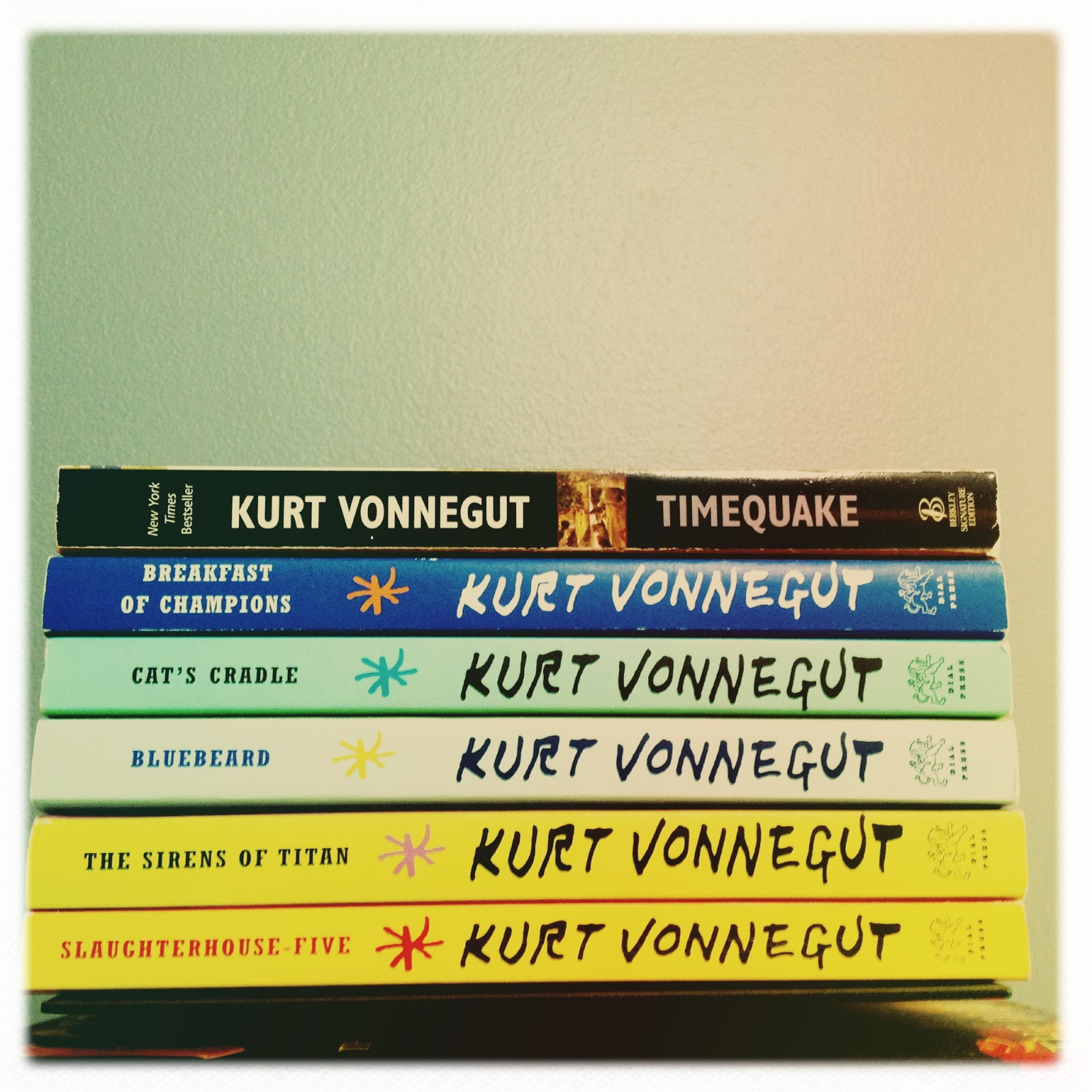


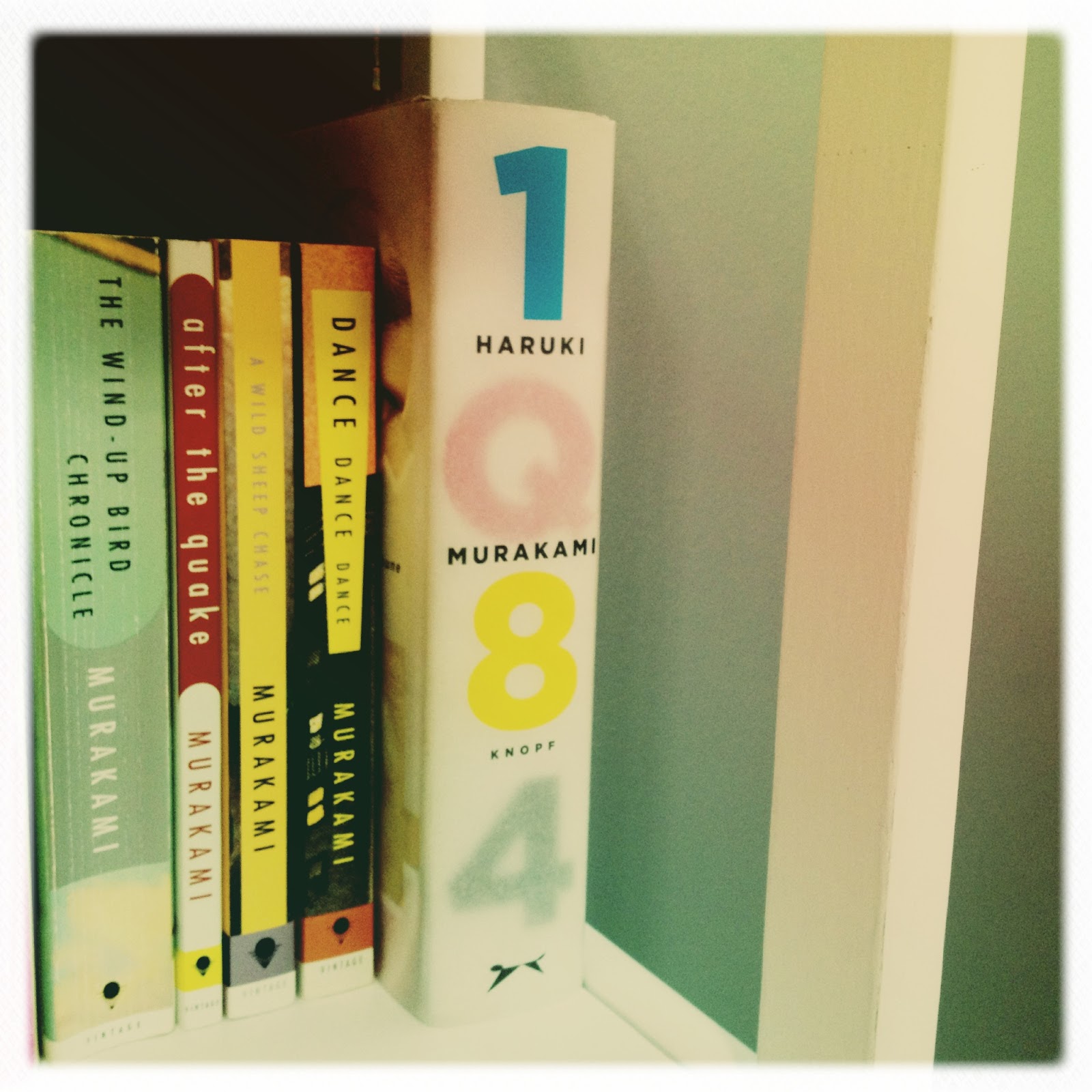
10 July 2013
Never Let Me Go
Right after finishing A Pale View of Hills, I went on to read my third Ishiguro book, which I had been hoping to read all summer: Never Let Me Go. I had the advantage of knowing next to nothing about the novel's plot, which was quite surprising; the book has been popular for a while now and a successful movie was even released a few years ago. The novel opens with Kathy H. introducing herself to the reader. She gives us her name, her age (28), and her profession (a carer).
Kathy grew up in a special boarding school called Hailsham, which is special not only for the excellent care provided for its students, but because of who (or what) makes up the student body. (SPOILER ALERT!) Kathy and her two best friends, Ruth and Tommy, are all clones fabricated for the sole purpose of donating their organs upon reaching adulthood. Reading the novel without really thinking about this information, though, made the whole experience for me. The fact of them being clones is never really said outright until the very end and is only hinted at around the middle of the book. One of the first more blatant hints is when Ruth, after leaving Hailsham, thinks she may have found her "possible," a term which refers to the real life person whom a clone was modeled off.
Of course, it is very obvious from the onset that these children are not regular kids: they have no families or memories before Hailsham, and they are all given stock names like Kathy H., Tommy D., Sarah P. The students grow up being told that they are special, that it is extra important for them to keep their bodies healthy. They are taught about sex, particularly that "normal" people do it when they are in love and hoping to have babies--but that Hailsham students cannot ever have babies. They even learn through play-acting how to interact with the outside world, say in a cafe or with a police officer. The students are constantly creating art, sharing it with one another and getting their pieces collected by guardians. Art indeed seems to be the focus of their education in Hailsham.
There is a common strangeness in all three Ishiguro novels I've read, and yet each book manifests this strangeness in a unique way. The raising of these children at Hailsham is extremely strange, made only more so when I was not really certain of their identities. A Pale View of Hills was eerie like a ghost-story, like a confusion of very important memories. The Unconsoled was beyond weird; I remember constantly feeling on my guard, knowing the novel was taking place in a world whose rules were not like those governing my own.
Another commonality between Ishiguro's books, one that makes his novels exceptionally moving, is how they all come together. In each of these three books there has been a particular scene towards the end that has left me shaking my head, overwhelmed, even with tears in my eyes. These scenes are strong enough to bring their respective stories to a great conclusion. I even wrote about this moment in my post on The Unconsoled. In Never Let Me Go, there is a very tense and charged scene towards the end of the novel where Tommy and Ruth, now a couple, come to understand the true nature of who they are, the truth about the ways of Hailsham and about the way the rest of world sees them: as fabrications to be raised like less than cattle. I can't explain the intensity of this scene or the way it so beautifully concluded the novel.
I recommend this novel to anyone. It was short and easy to read but poses deep, timeless questions about the nature of humanity; about the depth of the soul; about the risks of technological advancements; about love. It was sad and very beautiful.
I finished this book a while ago, and have since then started The Captive, the fifth installment of Marcel Proust's great novel, In Search of Lost Time! I am also about the finish Nathaniel Hawthorne's Scarlet Letter, which was assigned to me for class. I love it, though! It's deeply psychological and discusses things that are way ahead of its time.
Until next time... The Avid Reader.
Kathy grew up in a special boarding school called Hailsham, which is special not only for the excellent care provided for its students, but because of who (or what) makes up the student body. (SPOILER ALERT!) Kathy and her two best friends, Ruth and Tommy, are all clones fabricated for the sole purpose of donating their organs upon reaching adulthood. Reading the novel without really thinking about this information, though, made the whole experience for me. The fact of them being clones is never really said outright until the very end and is only hinted at around the middle of the book. One of the first more blatant hints is when Ruth, after leaving Hailsham, thinks she may have found her "possible," a term which refers to the real life person whom a clone was modeled off.
Of course, it is very obvious from the onset that these children are not regular kids: they have no families or memories before Hailsham, and they are all given stock names like Kathy H., Tommy D., Sarah P. The students grow up being told that they are special, that it is extra important for them to keep their bodies healthy. They are taught about sex, particularly that "normal" people do it when they are in love and hoping to have babies--but that Hailsham students cannot ever have babies. They even learn through play-acting how to interact with the outside world, say in a cafe or with a police officer. The students are constantly creating art, sharing it with one another and getting their pieces collected by guardians. Art indeed seems to be the focus of their education in Hailsham.
There is a common strangeness in all three Ishiguro novels I've read, and yet each book manifests this strangeness in a unique way. The raising of these children at Hailsham is extremely strange, made only more so when I was not really certain of their identities. A Pale View of Hills was eerie like a ghost-story, like a confusion of very important memories. The Unconsoled was beyond weird; I remember constantly feeling on my guard, knowing the novel was taking place in a world whose rules were not like those governing my own.
Another commonality between Ishiguro's books, one that makes his novels exceptionally moving, is how they all come together. In each of these three books there has been a particular scene towards the end that has left me shaking my head, overwhelmed, even with tears in my eyes. These scenes are strong enough to bring their respective stories to a great conclusion. I even wrote about this moment in my post on The Unconsoled. In Never Let Me Go, there is a very tense and charged scene towards the end of the novel where Tommy and Ruth, now a couple, come to understand the true nature of who they are, the truth about the ways of Hailsham and about the way the rest of world sees them: as fabrications to be raised like less than cattle. I can't explain the intensity of this scene or the way it so beautifully concluded the novel.
I recommend this novel to anyone. It was short and easy to read but poses deep, timeless questions about the nature of humanity; about the depth of the soul; about the risks of technological advancements; about love. It was sad and very beautiful.
I finished this book a while ago, and have since then started The Captive, the fifth installment of Marcel Proust's great novel, In Search of Lost Time! I am also about the finish Nathaniel Hawthorne's Scarlet Letter, which was assigned to me for class. I love it, though! It's deeply psychological and discusses things that are way ahead of its time.
Until next time... The Avid Reader.
28 June 2013
Ishiguro, Memory & Motherhood
It's been quite a while since I read Kazuo Ishiguro for the first time, having found The Unconsoled while browsing in Barnes and Nobles. I wrote some posts about it in early 2012, which can be found here. It seems like I read it much more recently; I vividly remember the strangeness of The Unconsoled, as well as the mesmerizing way Mr. Ryder experienced the events that occurred around him in the novel.
A Pale View of Hills is Ishiguro's first book, published in 1982. It centers around Etsuko, a Japanese woman who in the "present" has been married twice and has had two children. Her eldest daughter is named Keiko, but Keiko has hung herself before the book's events begin. Niki is Etsuko's youngest daughter, and the novel opens with Niki coming to visit Etsuko, now a widow living by herself in England. The mother and daughter spend some days together, and Etsuko finds herself reminiscing about a particular time when she was still living in Japan. Most of the novel focuses on these memories, which take Etsuko back to her youth when she was married with her first husband and pregnant for the first time with Keiko. Japan, at that time, was recovering from World War II, facing a time of great transition. The United States occupation had introduced many new ideas that disrupted traditional Japanese life. Of course, Nagasaki was also victim to the nuclear bomb. More personally, Etsuko was dealing with what seems to be a strange friendship with a neighbor named Sachiko, a widow who was living with a difficult daughter of her own.
Though the novel is less than 200 pages long, there is a lot to talk about. Firstly, there is the obvious presentation of memory. Ishiguro's novel makes quite clear the insufficiency of memory. Repetition in remembered dialogue, much like a broken record, is only one small way the novel demonstrates this. The narrator herself often says things such as: "Memory, I realize, can be an unreliable thing; often it is heavily colored by the circumstances in which one remembers, and no doubt this applies to certain of the recollections I have gathered here." (156) Towards the end of the novel, there is even more eerie and blatant mixing up of memories, but I will get into that later.
A second, very strong thematic concept that seems to run throughout the novel is that of the difficulties, the sadness, and intricacies of motherhood. In the earlier time frame of the novel, Etsuko is pregnant for the first time. She seems to feel understandably worried about this, especially considering the horror of the War that Etsuko and those around her had to witness. However, she also expresses a just-as-natural joy and expectation. One smaller character in the novel, who lost most of her family in the war, is buoyed up by her only existing son. Characters often express that as long as they have even one child, there is something worth hoping for.
Furthermore, in this earlier time frame, there is Sachiko, who is a very non-traditional mother. She lets her daughter, who is still quite young, run wild even when it is night and dark, even around a river. Sachiko seems to be in an unstable relationship with an American man, whom her daughter blatantly does not like. And yet, even with all this, Sachiko often speaks about doing only what she feels right for her daughter, and in her own way seems to be raising her daughter the best way she knows how. This theme of motherhood even runs into animals. Mariko and Sachiko have a cat who, throughout the course of the book, has kittens that Mariko cherishes very much. The intense feeling of protection that Mariko feels for these kittens is memorable and maternal, and at the end, her own mother drowns them, being unable to keep them any longer. This is a sad moment and one that in a strange way echoes the melancholy that permeates the book. For it is not to be forgotten that Etsuko's child kills herself. This event, though never written about, is at the center of the novel.
The second time frame also very much highlights motherhood in that it focuses exclusively on the relationship of Etsuko and Niki. They do not seem as close as Etsuko wants them to be: Niki is nineteen and independent, living in London away from her mother, leading a life that seems very different than what Etsuko knew growing up. But Etsuko is respectful of Niki's life choices and seems to focus on enjoying the time she has with her daughter. She also reminisces in this time on her own parenting skills, doubting herself on how she raised Keiko and dealt with her strange personality. The dual time frame very much emphasizes the theme of motherhood. In her memories, Etsuko is only pregnant and not yet a mother; in the present, knows only too well the sadness and rejection of motherhood.
It is interesting that Keiko is at the center of A Pale View of Hills, considering the reader never gets to properly meet her. Keiko is present in both settings, however. In one as an unborn child--in the other as a ghost and a memory. And it turns out that she may not be as absent as the reader was led to believe. Though this is a bit of a spoiler, it must be said that Mariko is not only what she seems to be on the surface: the strange daughter of Etsuko's one-time neighbor. In many ways, Mariko seems to be a harbinger, an echo, or a misremembered memory of Keiko. When telling her daughter Niki about a particular memory she had had, a memory the reader had been privvy to, Etsuko mentions Keiko having been in good spirits that day. And yet, the reader had been told Keiko was not yet born--only Meriko had been present.
There are many other themes and topics that I wanted to discuss, such as the more broader familial relationships in the novel (father-in-law and daughter-in-law, husband and wife, father and son, sisterhood, etc.), as well as the tensions between traditional Japanese culture and the modernization that came with WWII. I also wanted to briefly discuss the title. However, this post lengthens and my next book calls.
In fact, I read a book before A Pale View of Hills: The Blind Assassin, by Margaret Atwood. I won't write about it too much, but I enjoyed it. The novel is not light-hearted, it is kind of slow, and really it only comes together at the very end. Still, I recommend it to people who like books centering on family secrets.
Till next time, fellow readers!
The Avid Reader
A Pale View of Hills is Ishiguro's first book, published in 1982. It centers around Etsuko, a Japanese woman who in the "present" has been married twice and has had two children. Her eldest daughter is named Keiko, but Keiko has hung herself before the book's events begin. Niki is Etsuko's youngest daughter, and the novel opens with Niki coming to visit Etsuko, now a widow living by herself in England. The mother and daughter spend some days together, and Etsuko finds herself reminiscing about a particular time when she was still living in Japan. Most of the novel focuses on these memories, which take Etsuko back to her youth when she was married with her first husband and pregnant for the first time with Keiko. Japan, at that time, was recovering from World War II, facing a time of great transition. The United States occupation had introduced many new ideas that disrupted traditional Japanese life. Of course, Nagasaki was also victim to the nuclear bomb. More personally, Etsuko was dealing with what seems to be a strange friendship with a neighbor named Sachiko, a widow who was living with a difficult daughter of her own.
Though the novel is less than 200 pages long, there is a lot to talk about. Firstly, there is the obvious presentation of memory. Ishiguro's novel makes quite clear the insufficiency of memory. Repetition in remembered dialogue, much like a broken record, is only one small way the novel demonstrates this. The narrator herself often says things such as: "Memory, I realize, can be an unreliable thing; often it is heavily colored by the circumstances in which one remembers, and no doubt this applies to certain of the recollections I have gathered here." (156) Towards the end of the novel, there is even more eerie and blatant mixing up of memories, but I will get into that later.
A second, very strong thematic concept that seems to run throughout the novel is that of the difficulties, the sadness, and intricacies of motherhood. In the earlier time frame of the novel, Etsuko is pregnant for the first time. She seems to feel understandably worried about this, especially considering the horror of the War that Etsuko and those around her had to witness. However, she also expresses a just-as-natural joy and expectation. One smaller character in the novel, who lost most of her family in the war, is buoyed up by her only existing son. Characters often express that as long as they have even one child, there is something worth hoping for.
Furthermore, in this earlier time frame, there is Sachiko, who is a very non-traditional mother. She lets her daughter, who is still quite young, run wild even when it is night and dark, even around a river. Sachiko seems to be in an unstable relationship with an American man, whom her daughter blatantly does not like. And yet, even with all this, Sachiko often speaks about doing only what she feels right for her daughter, and in her own way seems to be raising her daughter the best way she knows how. This theme of motherhood even runs into animals. Mariko and Sachiko have a cat who, throughout the course of the book, has kittens that Mariko cherishes very much. The intense feeling of protection that Mariko feels for these kittens is memorable and maternal, and at the end, her own mother drowns them, being unable to keep them any longer. This is a sad moment and one that in a strange way echoes the melancholy that permeates the book. For it is not to be forgotten that Etsuko's child kills herself. This event, though never written about, is at the center of the novel.
The second time frame also very much highlights motherhood in that it focuses exclusively on the relationship of Etsuko and Niki. They do not seem as close as Etsuko wants them to be: Niki is nineteen and independent, living in London away from her mother, leading a life that seems very different than what Etsuko knew growing up. But Etsuko is respectful of Niki's life choices and seems to focus on enjoying the time she has with her daughter. She also reminisces in this time on her own parenting skills, doubting herself on how she raised Keiko and dealt with her strange personality. The dual time frame very much emphasizes the theme of motherhood. In her memories, Etsuko is only pregnant and not yet a mother; in the present, knows only too well the sadness and rejection of motherhood.
It is interesting that Keiko is at the center of A Pale View of Hills, considering the reader never gets to properly meet her. Keiko is present in both settings, however. In one as an unborn child--in the other as a ghost and a memory. And it turns out that she may not be as absent as the reader was led to believe. Though this is a bit of a spoiler, it must be said that Mariko is not only what she seems to be on the surface: the strange daughter of Etsuko's one-time neighbor. In many ways, Mariko seems to be a harbinger, an echo, or a misremembered memory of Keiko. When telling her daughter Niki about a particular memory she had had, a memory the reader had been privvy to, Etsuko mentions Keiko having been in good spirits that day. And yet, the reader had been told Keiko was not yet born--only Meriko had been present.
There are many other themes and topics that I wanted to discuss, such as the more broader familial relationships in the novel (father-in-law and daughter-in-law, husband and wife, father and son, sisterhood, etc.), as well as the tensions between traditional Japanese culture and the modernization that came with WWII. I also wanted to briefly discuss the title. However, this post lengthens and my next book calls.
In fact, I read a book before A Pale View of Hills: The Blind Assassin, by Margaret Atwood. I won't write about it too much, but I enjoyed it. The novel is not light-hearted, it is kind of slow, and really it only comes together at the very end. Still, I recommend it to people who like books centering on family secrets.
Till next time, fellow readers!
The Avid Reader
Subscribe to:
Posts (Atom)